Resemblance Is Not Structure
Historians routinely reach for the word “homology” when they mean “analogy,” and the difference matters more than disciplinary habit acknowledges. Analogy stages a resemblance; homology demonstrates that two fields are organized by the same generative principle, which is a far stronger and more demanding claim. The upshot for historians is a division of labor rather than a forced choice: homological analysis establishes the structural logic of a configuration; genealogical analysis traces how that configuration was produced and what it forecloses.
Learning to Think Slowly: An Intellectual Memoir of Early Graduate School
In this post I look back on my early graduate years as a time when my enthusiasm for theory and big questions outpaced my ability to build clear, grounded arguments from the archive. I describe how work on French anticlericalism, heterotopia, and historical temporality first revealed my tendency to move too quickly into abstraction and how consistent feedback pushed me to slow down, describe more carefully, and treat concepts as tools rather than as organizing worldviews. I then recount how turning to Iranian student activism in postwar France redirected these earlier interests toward concrete histories of exile and diaspora and forced me to confront both the politics of secularism and my own position as the child of Iranian immigrants.
A Woman on the Podium: Paniz Faryousefi and the Tehran Symphony Orchestra
In mid-November 2025, Iranian violinist and conductor Paniz Faryousefi led the Tehran Symphony Orchestra at Vahdat Hall in concerts titled “Land of Simorgh,” which Iranian and international outlets describe as the first time since the 1979 Islamic Revolution that Iran’s national symphony has appeared in public under a woman’s direction. The program combined works by contemporary Iranian composers with pieces from the classical repertoire and ended with a dedication to “the women and mothers of Iran,” followed by official recognition from the Rudaki Foundation. The post situates Faryousefi within Iran’s classical music world by outlining her conservatory training, ensemble leadership, and international collaborations, and it examines her own insistence that art belongs to humanity rather than to one gender.
How Far Can Lexicometry Take Us?
This post evaluates the usefulness of IRaMuTeQ and related lexicometric tools for discourse analysis by examining their role in Albin Wagener’s recent article on French republicanism. It acknowledges that such tools can highlight dominant vocabularies. Yet it argues that their abstraction flattens genre and encourages inferences about narrative or ideology. I suggest that lexicometric output can support discourse research only when paired with methods attentive to historical contingency.
The Politics of Sartre’s Grabuge
This article examines the “Politics of grabuge” passage in Jean-Paul Sartre’s 1961 Rome Lecture as a key demonstration of his late theory of subjectivity. It argues that Sartre’s recollection of the 1945 naming meeting for Les Temps modernes—in which Michel Leiris proposed the title Le Grabuge—illustrates how individual history and class being become institutional form through acts of language. The anecdote, long treated as incidental, reveals Sartre’s concept of “retotalization”: the continual reconstruction of a subject’s past into present praxis under conditions of partial self-knowledge. Drawing on Simone de Beauvoir’s memoir, contemporary reception of Les Temps modernes, and parallel instances of naming in mid-century intellectual life, the essay situates Sartre’s reflection within broader debates about class consciousness. It shows that the refusal of Le Grabuge was a philosophical choice, a decision that transformed the potential for scandal into a politics of responsibility. The analysis thus reads the episode as Sartre’s concrete laboratory for the mediation of subjectivity and history, anticipating later conflicts between existential and structural Marxism.
From Structure to History: Applying Bourdieu’s Theory of Practice to the Archive
This essay offers a close reading of Pierre Bourdieu’s “Social Space and Symbolic Power” (1989) and interprets its significance for historical research. It investigates how Bourdieu’s concepts of social space, capital, habitus, and symbolic power can deepen the historian’s understanding of how archives, institutions, and categories shape both historical experience and historical writing. The essay aims to show how Bourdieu’s analysis of classification provides historians with a framework for studying the formation of meaning within systems of power. It treats Bourdieu’s essay as a methodological reflection that clarifies how social relations generate the very evidence historians analyze.
Between “Hot Identities” and “Cold Constellations”: On Bauböck and Faist’s “Diaspora and Transnationalism”
Rainer Bauböck and Thomas Faist’s Diaspora and Transnationalism: Concepts, Theories and Methods advances a disciplined framework for studying cross-border social formations by redefining “diaspora” and “transnationalism” as analytical perspectives rather than as fixed empirical categories. The volume argues that diaspora highlights affective and symbolic dimensions of belonging grounded in collective memory and moral claims, while transnationalism illuminates the institutional and material processes that sustain cross-border flows of people, ideas, and resources. Through contributions by scholars such as Nina Glick Schiller, Valentina Mazzucato, Koen Jonkers, Paolo Boccagni, and others, the book challenges methodological nationalism and proposes multi-scalar research designs capable of capturing simultaneity, private and public networks, and the infrastructural bases of global connection. Bauböck’s concept of “citizenship constellations” links these insights to a normative theory of political membership distributed across interdependent states. The collection as a whole transforms diaspora and transnationalism from diffuse metaphors into precise instruments for analyzing how identity, practice, and institution interact in the governance of mobility and belonging.
Life as Politics: Asef Bayat on Street, Society, and the Ordinary in the Middle East
This article examines the theoretical contributions of Asef Bayat to the study of activism and social change in the Middle East. Across six essays written between 1994 and 2012, Bayat develops a framework that centers the political agency of ordinary people under authoritarian and neoliberal conditions. Through concepts such as quiet encroachment of the ordinary, street politics, passive networks, imagined solidarities, the city-inside-out, and non-movements, Bayat reconceptualizes politics as embedded in the everyday practices of squatters, vendors, migrants, youth, and Islamists. The article situates Bayat’s work within broader debates on civil society, social movement theory, and subaltern studies, while drawing comparisons to Latin America, Africa, and South Asia. It argues that Bayat compels scholars to rethink the relationship between survival, dignity, and political change, offering an account of how “life itself” becomes political.
Foucault’s Radical Historicism: Limits, Tensions, and the Specter of the Transcendental
In his article, “The Limits of Radical Historicism: The Methodological Significance of Foucault’s Relationship to Transcendental Philosophy,” Leonard D’Cruz critically examines Michel Foucault’s attempt to historicize epistemological conditions while avoiding the pitfalls of transcendental philosophy. At the core of this inquiry is the tension between Foucault’s commitment to radical historicism—the view that knowledge, power, and subjectivity are entirely contingent on historical circumstances—and the possibility that his methodology inadvertently reintroduces quasi-transcendental structures. “The Limits of Radical Historicism” raises a fundamental question for scholars invested in historicist critique: Can Foucault successfully extricate his framework from transcendental categories, or do aspects of his thought implicitly depend on the very structures he seeks to reject? In exploring this issue, D’Cruz’s analysis serves as a crucial intervention in debates on the limits of radical historicism, offering insights that extend beyond Foucault’s work to broader methodological concerns in historiography and critical theory.
Power, Resistance, and the Limits of Critique: Engaging Cronin on Foucault and Bourdieu
Few debates in modern social theory are as rich and consequential as the discussion surrounding power, agency, and resistance. Theories of power not only shape how we understand domination but also influence how we imagine resistance. Two of the most influential thinkers on this subject, Michel Foucault and Pierre Bourdieu, have offered distinct yet overlapping accounts of power, both of which continue to shape academic and political discourse.
Nostalgia, Diaspora, and Iranian Neo-Monarchists: A Genealogical Exploration of Longing and Politics
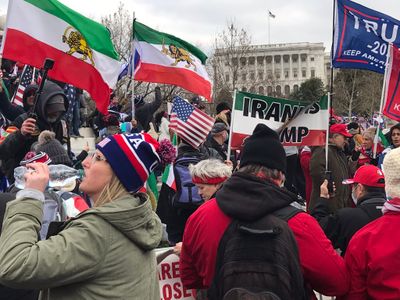
This article examines how a segment of the Iranian diaspora—particularly those identifying with “neo-monarchist” ideals—employs nostalgia to mythologize Iran’s Pahlavi past and rally political support for restoring the monarchy. Drawing on theorists like Kathleen Stewart and Hamid Naficy, it demonstrates how nostalgia functions as a “cultural practice” that can distort history and spark reactionary political fervor. Through examples from Los Angeles (“Tehrangeles”), the January 6 Capitol attack, and social media groups praising the late Shah, the piece illustrates how idealized memories of imperial Iran galvanize newly established organizations like Iranian Americans for Liberty, which advocate a U.S.-backed overthrow of the Islamic Republic. Ultimately, it warns that such nostalgia can foster discord rather than unity, serving as a powerful yet potentially regressive political force within the diaspora.
The Zettelkasten as Rhizome: Discipline, Reflection, and Architectures of Thought
In an era defined by instant gratification, the deliberate, methodical process of zettelkasten stands as a quiet act of resistance. It cultivates cognitive endurance, stretches attention spans, and fosters a richer, more reflective engagement with knowledge. Over time, it transforms the practitioner, nurturing a resilient mind attuned to nuance, complexity, and depth.
Temporal Multiplicity in E. P. Thompson and Reinhart Koselleck
This essay reads E. P. Thompson’s “Time, Work-Discipline, and Industrial Capitalism” against Reinhart Koselleck's Futures Past to show that two canonical accounts of temporal modernity move in opposite directions. Thompson narrates a compression in which plural premodern temporalities are disciplined into capitalist clock time, while Koselleck narrates a proliferation in which the collapse of eschatological expectation opens up multiple modern temporal horizons. The essay argues that this divergence is fundamentally methodological: Thompson’s Marxist social history centers laboring people and reads temporal change as dispossession, whereas Koselleck’s conceptual history centers elite cultural production and reads it as the emergence of radical openness. The comparison makes visible how the question of temporal multiplicity is inseparable from the question of whose time is being examined and from what disciplinary vantage.
Recent Work on Colonial Violence in French Algeria
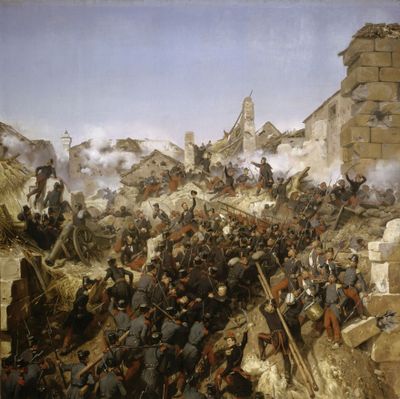
The primary texts under discussion include Benjamin Claude Brower’s A Desert Named Peace: The Violence of France’s Empire in the Algerian Sahara, 1844-1902 (2009); Jennifer E. Sessions’s By Sword and Plow: France and the Conquest of Algeria (2011); Judith Surkis’s Sex, Law, and Sovereignty in Algeria, 1830-1930 (2019); and Joshua Cole’s Lethal Provocation: The Constantine Murders and the Politics of French Algeria (2019). Taken together, these texts provide insight about four typologies of violence and violent behaviors in the French Algerian colonial field: physical violence (including structural violence), ideological violence (including symbolic violence), juridico-discursive violence, and inter-communal violence (by way of) provocation.
Exteriorizing Subjectivity: Snapchat and Pharmacopornographic Biocapitalism
Welcome to the pharmacopornographic regime. Digital screens, monitors, and interfaces of every size buzz, pulsate, and project wave-particles of light into the air, all around us, twenty-four hours a day. For those born after the advent of Web 2.0 (at the new millennium), there has never been a period of non-digitally mediated subjectivity. The entanglements of technology, late-modern capitalism, and our use of technology in the context of late-modern capitalism raise questions of baffling complexity and of intense urgency.