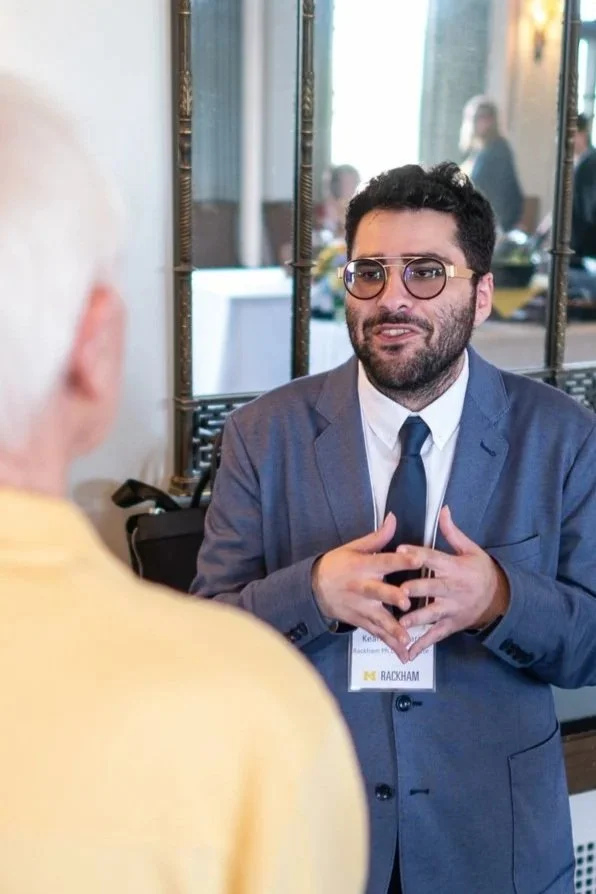
I offer consulting in four areas: pedagogy and curriculum design, research and knowledge-work systems, historical reconstruction and archival research, and translation and editing. My approach is grounded in the methods of historical scholarship and shaped by ongoing collaboration with instructors and institutions across disciplines.
Consulting services
-
I support faculty, graduate instructors, and academic programs that want to make courses more intellectually rigorous and more accessible at the same time. My approach treats equity-focused teaching as a set of habits rather than a separate category of concern, which means questions about how course structures and policies shape student experience across race, class, disability, nationality, and religion surface throughout the work rather than sitting in a bolt-on module.
Redesign projects typically begin with syllabi and participation structures, where I help clients articulate learning goals that are explicit and realistic. From there the work moves to aligning activities and assessments with those goals, giving students a clear sense of what counts as success. I also work on the predictable pressure points that derail good teaching: feedback load and grading policies, along with the broader question of classroom climate. For departments and programs, the scope widens to curricular coherence across multiple courses, including gateway sequences and capstone or writing-intensive requirements. I design workshops at this level that address pedagogical technique and institutional culture together, since the two shape each other in practice.
This work is informed by current research on learning and by my experience as a graduate student instructional consultant, which keeps me in ongoing conversation with students from a wide range of backgrounds. Typical projects range from a one-time syllabus review to multi-week collaborations on course or curriculum redesign.
-
Academic and professional life often rewards output while leaving people to improvise their own systems. I help scholars and practitioners build workflows that are intellectually honest and realistically maintainable. The most common starting point concerns how sources get processed, with the goal of making reading and note-taking actually support future reuse rather than decay into inert archives; citation practices usually enter the same conversation. Another piece of the work involves planning writing pipelines, whether for scholarly articles and chapters or for public writing, with attention to scope and revision cycles. I also help clients design personal information management systems that integrate digital tools with existing habits, building on what already works instead of demanding a wholesale overhaul. These collaborations can take the form of a single diagnostic conversation or a series of sessions that track a specific project from idea to completion.
-
As a historian of modern Europe and the Middle East, I work on projects that require careful reconstruction of past events. Institutional histories and intellectual lineages often enter the same frame, particularly when clients need to understand how a present-day organization or commitment came to have the shape it does. My own research sits at the intersection of exile and diaspora studies and the ethics of representing contested pasts, which means I pay particular attention to the stakes of human rights history and to questions about whose voices carry authority in archival materials.
Scholars and research teams come to me when they want to frame archival or oral-history materials for publication or public engagement. Programs, centers, and nonprofits approach me for historically grounded backgrounders or white papers, often when they need to situate a current initiative against a longer institutional history. Faith communities and educational institutions sometimes seek help connecting institutional memory with present-day commitments. In each case, the work centers on helping clients clarify the story they wish to tell.
-
I work with scholars and institutions on translation from French, German, or Persian into English, and on editing for academic and public-facing prose. My translation work draws on training as a historian of modern Europe and the Middle East, which means I bring contextual judgment about period vocabulary and the rhetorical conventions of the texts I am rendering. Editing follows a similar logic: I work to clarify the argument the writer is already trying to make, with attention to the shape of the overall argument and the precision of individual claims.
Typical translation projects include scholarly articles and argumentative prose. Engagements range from a one-time pass on a single document to ongoing collaboration across the lifecycle of a project.
-
I collaborate with individual instructors, research teams, departments, centers, and nonprofits. Engagements range from one-on-one consultations and small-group workshops to longer-term partnerships tied to specific initiatives. To discuss a potential project, please use the contact form on this site. A brief description of your goals and institutional context is helpful, along with any timeline you are working within. I will respond with clarifying questions and a proposed scope of work.