Resemblance Is Not Structure
→
Historians routinely flatten analogy and homology into near-synonymy, but the two concepts make claims of fundamentally different kinds, and recovering the distinction changes what a historical argument can demonstrate and how far it can travel beyond the case at hand.
Learning to Think Slowly: An Intellectual Memoir of Early Graduate School
→
I reconstruct my early graduate training as an uneven education in subordinating theory to evidence.
The Politics of Sartre’s Grabuge
→
Sartre’s 1961 anecdote about rejecting Le Grabuge as a title for Les Temps modernes is no incidental aside but a compact demonstration of retotalization, showing how class position crystallizes in an act of naming and how refusing that name remade disposition into disciplined engagement.
Foucault’s Radical Historicism
→
Leonard D’Cruz asks whether Foucault’s radical historicism truly escapes transcendental philosophy or smuggles it back in through the historical a priori, omnipresent power, and subjectivation, arguing that naming this tension strengthens historicist critique rather than defeating it.
Power and the Limits of Critique: Engaging Cronin on Foucault and Bourdieu
→
Ciaran Cronin argues that Bourdieu offers a more actionable account of power than Foucault, but his critique demands a normative framework neither thinker claims to provide and misreads Foucault as foreclosing resistance; the two are better combined than opposed.
Iranian Neo-Monarchism and the Politics of Diasporic Longing
→
Royalist nostalgia in the Iranian diaspora and hawkish U.S. Iran policy operate as mutually reinforcing formations, each lending the other moral warrant and institutional durability; a genealogical reading exposes the contingency and silences that sustain this co-produced longing.
Temporal Multiplicity in E. P. Thompson and Reinhart Koselleck
→
Thompson and Koselleck offer mirror-image narratives of temporal modernity: Thompson traces a compression of plural premodern rhythms into disciplinary clock time, Koselleck a proliferation of horizons as eschatology dissolves. The divergence is methodological.
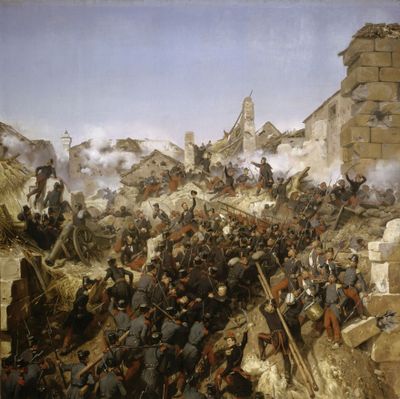
Recent Work on Colonial Violence in French Algeria
→
Surveying four monographs on colonial violence in French Algeria (Brower, Sessions, Surkis, Cole), this essay shows how each abandons the colonizer/colonized binary for a view of violence as plural in logic, and treats metropole and colony as a single analytic field.
Exteriorizing Subjectivity: Snapchat and Pharmacopornographic Biocapitalism
→
Reading Snapchat through Preciado’s pharmacopornographic regime and Steyerl’s critique of linear perspective, this essay argues that the app’s ephemeral, haptic architecture works as a biopolitical dispositif, exteriorizing subjectivity and folding self-produced erotic imagery into biocapital.